
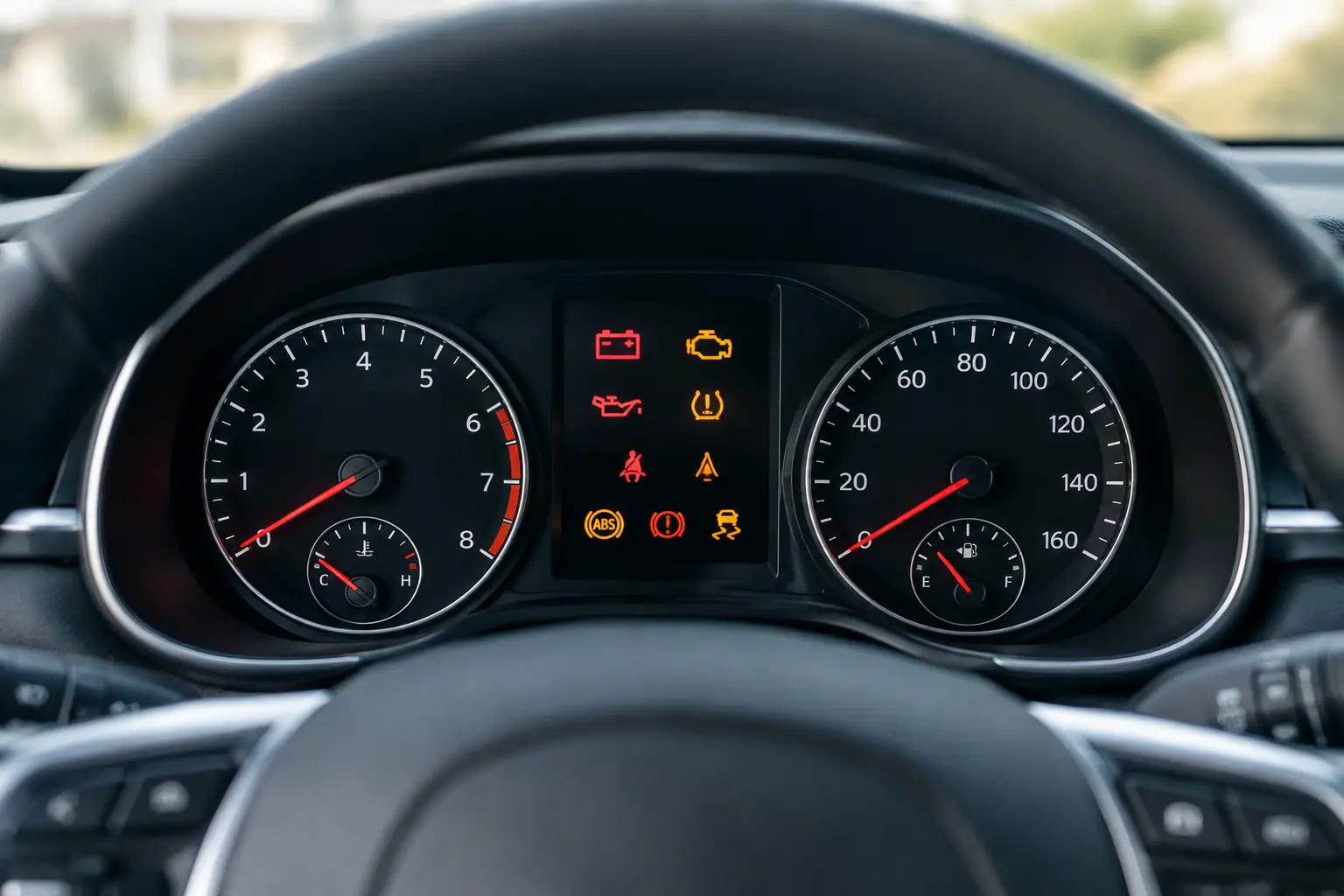
Dashboard Warning Light Meanings Explained
A warning light can turn an ordinary drive to work, school, or the grocery store into a stressful guessing game. Understanding dashboard warning light meanings helps you make the right next move: safely pull over, schedule service soon, or simply check that a system is switched on. The symbol matters, but so do its color, whether it is flashing, and how your vehicle feels while you drive.
Dashboard Warning Light Meanings by Color
Most vehicles use a simple color system, similar to a traffic signal. Red lights call for immediate attention. Yellow or amber lights mean a system needs service or monitoring soon. Green, blue, and white lights usually confirm that a feature is active.
That said, your owner's manual is still the final word for your specific vehicle. The same-looking symbol can have a slightly different meaning between makes and models. If a warning light appears with poor braking, overheating, smoke, strange noises, or a major change in how the vehicle drives, treat the situation more seriously regardless of the light's color.
Red Warning Lights: Stop When It Is Safe
A red dashboard light does not always mean the vehicle will fail immediately, but it should never be ignored. Find a safe place to pull over as soon as possible and avoid continuing to drive until you understand the problem.
Oil Pressure Warning
The oil pressure light often looks like an old-fashioned oil can. It means the engine may not have enough oil pressure to properly lubricate its moving parts. Driving with low oil pressure can cause severe engine damage in a very short time.
Pull over, shut off the engine, and check the oil level only after the vehicle is parked safely on level ground. A low level may be part of the issue, but a full oil level does not rule out a failed oil pump, clogged passage, or sensor problem. Do not assume adding oil makes it safe to drive without confirming the cause.
Engine Temperature Warning
A thermometer-shaped light, often above wavy lines, warns that the engine is overheating. Stop driving, turn off the engine, and allow it to cool. Never open a hot radiator cap or coolant reservoir cap. Pressurized hot coolant can cause serious burns.
Overheating may be caused by low coolant, a leak, a failed thermostat, radiator trouble, a cooling fan issue, or a water pump problem. In Michigan, cooling-system problems can show up in both summer heat and winter conditions, so this light deserves prompt attention any time of year.
Brake System Warning
A red brake warning light may mean the parking brake is still engaged, but it can also indicate low brake fluid or a hydraulic brake-system issue. First, make sure the parking brake is fully released. If the light stays on, the brake pedal feels soft, the vehicle pulls while braking, or you hear grinding, do not keep driving.
Your brakes are not a system to wait on. Have the vehicle inspected before a small leak or worn component becomes a safety issue.
Battery or Charging-System Warning
The battery-shaped light usually points to a charging-system problem, not necessarily a bad battery. The alternator, drive belt, wiring, battery connections, or battery itself may be at fault. Your vehicle can often continue running temporarily on stored battery power, but it may stall once that power is depleted.
Turn off unnecessary electrical accessories, such as heated seats or phone chargers, and arrange service promptly. If the vehicle begins losing power or other warning lights appear, pull over safely.
Yellow and Amber Lights: Service Soon
Amber warning lights often allow you to drive carefully for a short period, but they still need attention. Waiting too long can turn a manageable repair into a more expensive one.
Check Engine Light
The check engine light can be triggered by something relatively simple, such as a loose fuel cap, or by a problem involving the engine, emissions system, ignition, fuel delivery, or sensors. If the light is solid and the vehicle feels normal, check that the gas cap is secure and schedule a diagnostic visit.
A flashing check engine light is more urgent. It often signals an active engine misfire that can damage the catalytic converter. Reduce speed, avoid hard acceleration, and stop driving if the vehicle is shaking, losing power, or running rough.
Tire Pressure Monitoring Light
The tire pressure light typically looks like a flat tire with an exclamation point inside it. It may mean one or more tires are underinflated, or it may indicate a tire-pressure monitoring system fault. Cold weather commonly lowers tire pressure, but a repeating warning could point to a slow leak, puncture, damaged wheel, or failing sensor.
Check tire pressures against the label inside the driver's door, not the maximum pressure printed on the tire sidewall. If a tire looks visibly low, has a bulge, or loses air quickly, do not rely on the warning light alone. Have it inspected.
ABS and Traction Control Lights
An ABS light means the anti-lock braking system may not function correctly. Your regular brakes may still work, but the wheels could lock during hard braking. A traction-control light may flash briefly when the system is actively helping on wet, snowy, or slippery roads. If it stays on continuously, the system may be disabled or have a fault.
These systems matter most when road conditions are poor. Schedule an inspection, especially if the brake warning light is also on.
Airbag Warning Light
An airbag or supplemental restraint system light means the airbags, seat belt pretensioners, or related sensors may not work as intended in a collision. The vehicle may drive normally, which makes this warning easy to postpone, but passenger protection should not be put off.
Lights That Usually Indicate Normal Operation
Not every illuminated symbol means something is wrong. Green arrows show turn signals, a blue headlight symbol usually means high beams are on, and a green cruise-control symbol confirms the feature is active. Many vehicles also display lights for fog lamps, lane-assist features, auto start-stop, and drive modes.
If a light is blue, green, or white but you do not recognize it, take a moment to identify it in the owner's manual. It may be normal operation, or it may explain why a feature is behaving differently than expected.
What to Do When a Warning Light Appears
Start by paying attention to the vehicle, not just the symbol. Notice whether the engine is running smoothly, the steering feels normal, the brakes respond properly, and there are any unusual smells, smoke, or fluid leaks. A red light, flashing check engine light, overheating condition, or brake concern calls for stopping safely rather than trying to make it home.
For a yellow light with no change in performance, write down when it appeared and what was happening at the time. Did it come on after fueling up, during a cold morning start, or while accelerating? That information can help a technician diagnose the issue efficiently.
Avoid clearing a warning light just to see whether it returns. Disconnecting the battery or using a basic code reader may erase helpful diagnostic information. The light may go out temporarily while the underlying issue remains.
Why Professional Diagnostics Matter
A warning light identifies a system, not always the failed part. For example, a check engine code may point to an air-fuel mixture issue, but the real cause could be a vacuum leak, worn spark plug, faulty sensor, fuel-delivery problem, or wiring concern. Replacing parts based on a code alone can waste time and money.
A proper diagnosis includes reading fault codes, checking live data, inspecting related components, and confirming the repair. At Alaw Auto Repair, certified technicians can explain what the warning means, what caused it, and which repair is actually needed before work begins.
A dashboard warning light is your vehicle asking for attention before a problem gets worse. If you are unsure whether it is safe to drive, choosing caution is the right call. A quick inspection today can protect your vehicle, your budget, and the people riding with you tomorrow.



Comments